
How to Choose a Time and Attendance System in South Africa
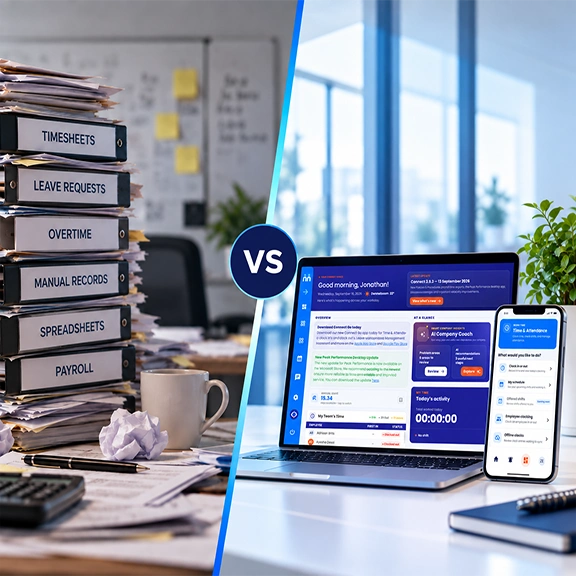
Choosing a time and attendance system is not simply about finding a better way to record when employees arrive and leave.
For South African employers, the right system should help turn daily attendance data into clear, reliable and traceable workforce records that managers can actually use.
So, what should you look for?
1. Start with accurate attendance records
The foundation of any attendance system is simple: can you trust the data?
South Africa's Basic Conditions of Employment Act (BCEA) requires employers to keep records that include the time worked by employees, and these records generally need to be retained for three years.
Your system should therefore make it easy to answer questions such as:
- When was the employee scheduled to work?
- When did they actually clock in and out?
- Were there missed or late clock-ins?
- Was overtime worked?
- Were changes to the record reviewed and corrected?
- Can the final record be retrieved when needed?
A clock-in is useful. A dependable attendance history is far more valuable.
2. Choose the right clock-in method for your workforce
Not every business operates from one office.
For businesses with field teams, multiple locations or deskless employees, a traditional clocking terminal may not be enough.
Look for options such as:
- Mobile clock-ins: Employees can record attendance using a mobile device rather than travelling to a fixed terminal.
- Geofenced or location-verified clock-ins: These can help businesses confirm whether a clock-in took place at an approved work location.
- Facial recognition: This can provide another method of verifying who is clocking in and help reduce problems associated with employees clocking in for one another.
Connect, for example, provides facial recognition, mobile and tablet clock-ins, and geo-fenced site validation as part of its Time & Attendance functionality.
For mobile and biometric systems, privacy also matters. Under POPIA, location and biometric information are personal information, so businesses should understand how this information is collected, used and protected.
3. Look beyond clock-ins
One of the biggest mistakes when comparing attendance systems is focusing only on the clocking technology.
The real value comes from what happens after someone clocks in.
A useful attendance management system should help managers identify exceptions such as: late arrivals, early departures, missed clock-ins, absenteeism, overtime, unusual attendance patterns, and records requiring correction or approval.
The goal should not be more attendance data. It should be better visibility into what needs attention.
4. Make sure attendance connects with leave and working hours
Attendance rarely exists in isolation.
If an employee appears absent, they may actually have approved leave. If someone works beyond their scheduled shift, the business may need to determine whether the additional time qualifies as authorised overtime.
The BCEA contains requirements relating to ordinary working hours and overtime, which makes reliable working-time records especially important.
Managing attendance, leave and related workforce information together gives managers more context than reviewing disconnected records.
5. Consider how easily managers can correct exceptions
No attendance system eliminates human error completely.
Employees forget to clock in. Devices fail. Managers make corrections.
What matters is whether those exceptions are handled through a structured process.
Clear, traceable corrections create much stronger records than informal changes communicated through WhatsApp messages, emails or spreadsheets.
6. Think about multiple teams and locations
A system that works for 20 employees at one location may become difficult to manage when the business grows to several departments or sites.
If growth is part of your plan, look for a system that allows management to view attendance across different teams and locations, standardise processes, and access reports without gathering information from multiple systems.
7. Ask what happens to the data after it is captured
Does this system only record attendance, or does it help us manage attendance?
The strongest systems should help businesses turn employee data into management action.
Connect takes this broader approach by bringing Time & Attendance together with functionality including Leave Management, Contracts, Performance Management and other workforce processes within one platform.
The bottom line
When choosing a time and attendance system in South Africa, do not start with the question: “How do employees clock in?”
Start with: “Will this give us attendance records we can trust and a process our managers can actually use?”